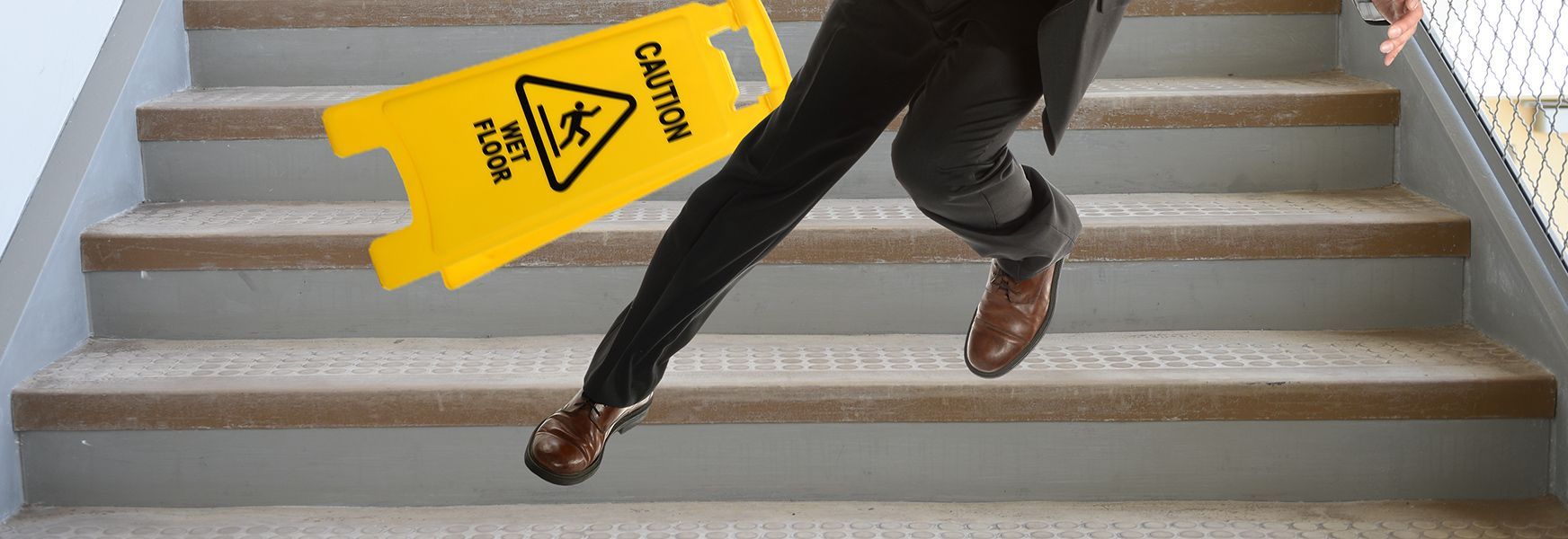

Do I Have a Case If I Slipped and Fell at a Business?
You were walking through a store when your feet went out from under you. Maybe it was a wet floor. Maybe a mat that slid. Maybe something spilled in an aisle that no one cleaned up.
Now you're hurt—your back, your wrist, your hip. The medical bills are piling up. You missed work. And you're wondering: can I hold the business responsible?
The answer isn't as simple as you might hope. But it's probably not as hopeless as you fear, either.
The Short Answer
You may have a case, but it depends on whether the business failed to keep its premises reasonably safe. Unlike car accidents, where fault is often clear, slip and fall cases require proving that the property owner knew or should have known about the hazard—and failed to fix it or warn you.
These cases are harder than most people expect. But "harder" doesn't mean impossible.

Why Slip and Fall Cases Are Different
If you've ever heard about car accident claims, you might assume injury cases are straightforward. Someone does something wrong, you get hurt, they pay. Simple.
Premises liability doesn't work that way.
In a car crash, fault often feels obvious. Someone ran a red light. Someone rear-ended you at a stoplight. Someone crossed the center line. The rules of the road are clear, and violations are easy to identify.
In a slip and fall, the picture is murkier. Sometimes people fall and it's nobody's fault. Genuine accidents happen. Someone might trip on a perfectly normal sidewalk curb. It happens every day, and no one is liable.
Insurance companies and defense attorneys know this. In almost every fall case, they argue that the injured person is partly or fully to blame—for not watching where they were going, for wearing particular footwear, for being distracted. And that argument has traction with juries in ways that similar arguments in car cases often don't.
This doesn't mean you can't recover. It means the analysis is more complicated, and the outcome is less predictable.
What You Have to Prove
To have a viable slip and fall case in New Mexico, you generally need to show three things.
The property had a hazardous condition. This sounds obvious, but it's actually the first question in any case. Not every wet floor is a hazard. Not every uneven surface is dangerous. Context matters enormously.
A puddle in a locker room a few feet from the showers? That's probably expected. A puddle in the middle of a grocery store aisle? That's different. What's acceptable on an outdoor hiking trail would be completely unacceptable on the polished floor of a department store.
The business knew or should have known about the hazard. This is where many cases get complicated. You can't hold a business responsible for a hazard they didn't know existed—unless they should have known.
"Should have known" is called constructive knowledge. If a business has reasonable inspection procedures and follows them, they'll discover hazards before customers get hurt. If they don't have those procedures, or don't follow them, they can be held responsible for hazards they would have found through ordinary care.
How often should a grocery store check its aisles? More often than a bookstore, probably—groceries involve more spills, more foot traffic, more perishable products. The busier the store and the higher the risk of spills, the more frequent the inspections should be.
The business failed to fix the hazard or warn you about it. Once a business knows about a dangerous condition, they have to do something about it. Fix it, clean it up, block it off, or at minimum post a warning. If they knew about a hazard and did nothing, that's negligence.
What If the Hazard Was Obvious?
Here's something that surprises people: in New Mexico, you can still recover even if the hazard was visible or apparent.
The defense will almost certainly argue that you should have seen the wet floor, the pothole, the ice patch. They'll say it was "open and obvious" and you should have avoided it.
But under New Mexico law, property owners have a duty to keep their premises safe even if the hazard is obvious. The fact that you could see it doesn't automatically let them off the hook.
That said, an obvious hazard may factor into comparative fault. The jury might conclude you should have been more careful. But it's not an automatic defense that eliminates the business's responsibility.
Comparative Fault: You Can Share Blame and Still Recover
New Mexico uses comparative fault, which means the jury assigns a percentage of responsibility to everyone involved—including you.
Let's say you fell on a wet floor at a restaurant. The jury might find the restaurant 70% at fault for not cleaning up a spill that had been there for twenty minutes. But they might also find you 30% at fault for looking at your phone instead of watching where you walked.
If your damages were $100,000, you'd recover $70,000—your damages reduced by your share of fault.
This is important because it means you don't have to be blameless to have a case. Even if you contributed to your own injury, you may still be entitled to compensation for the portion that was the business's fault.
The insurance company will absolutely argue you were partly responsible. Expect it. Your job—or your attorney's job—is to minimize that percentage and maximize what's attributed to the property owner's negligence.
Who's Actually Responsible?
One thing that makes premises cases complicated: the business you fell at may not be the only responsible party.
The building owner may be different from the business tenant. The tenant may have contracted out cleaning or maintenance to a third party. If you fell in a parking lot or on a sidewalk, those areas might be the landlord's responsibility—or even the city's, if it's a public sidewalk.
Identifying all potentially responsible parties matters because each may have separate insurance coverage. If one party has limited coverage, another might have more.
This is detective work. It involves property records, lease agreements, and sometimes corporate structure research. An attorney experienced in premises cases knows where to look.
What About Warning Signs?
You might think a "Wet Floor" sign protects the business completely. It doesn't.
A warning sign is just another fact in the analysis. If the sign was positioned where you couldn't reasonably see it, or if one sign wasn't enough for a large area, the business may still be liable. And if the hazard had existed long enough to be fixed rather than just signed, the business might have been obligated to actually address it.
Conversely, if there wasn't a warning sign, that doesn't automatically mean the business is liable. It's evidence in your favor, but you still have to prove they knew or should have known about the hazard.
What to Do If You've Fallen
If you've already fallen and you're reading this afterward, don't panic. Many cases succeed even without perfect documentation. But the more evidence you have, the stronger your position.
Report the incident. If you're at a business, ask management to complete an incident report. Request a copy—they may or may not give you one, but ask.
Take photographs. Use your phone to photograph the hazard, the surrounding area, and anything else relevant—the address, any signage (or lack of it), the conditions of the floor. These don't need to be professional photos. Just document what you can.
Get witness information. If anyone saw what happened, get their name and contact information. This includes people you were with, other customers, and employees.
Request surveillance footage. Ask the business to preserve any video that might have captured the incident. Footage often gets deleted automatically after days or weeks, so the sooner this request is made, the better.
Get medical attention. If you're hurt, see a doctor. Some injuries don't show their full extent immediately—you might feel okay at first and worse the next day. Getting checked out creates a medical record connecting your injuries to the fall.
Why These Cases Are Harder Than Car Accidents
People sometimes assume that if they were hurt on someone else's property, they have an automatic case. That's not how it works.
Premises cases are more context-dependent, more fact-intensive, and more contested than typical car accident claims. The insurance company will fight harder on liability. They'll scrutinize your footwear, your attention, your medical history, your prior falls. They'll argue the hazard wasn't really hazardous, or that they didn't know about it, or that you should have avoided it.
None of this means you shouldn't pursue a legitimate claim. It means you should understand what you're getting into and have realistic expectations about the process.
The Bottom Line
If you slipped and fell at a business in New Mexico, you may have a case—but it depends on the specific facts. Did a hazardous condition exist? Did the business know or should they have known? Did they fail to address it?
These questions require investigation. The answers aren't always obvious, and the insurance company won't volunteer information that helps you.
If you were seriously hurt and believe the business was at fault, it's worth having a conversation with an attorney who handles premises liability cases. They can evaluate your situation, identify the potentially responsible parties, and give you an honest assessment of whether you have a viable claim.
At 505 Legal, we help people injured on someone else's property understand whether they have a viable claim. Premises liability cases are fact-intensive, and the insurance company will fight hard. If you've been seriously hurt in a fall, we're here to evaluate your situation and explain your options.
Written by Kenneth H. Stalter, Co-Founder, 505 Legal.
Practice Areas
Our Recent Posts

Our Attorney Team

Shellie Patscheck
Founding Attorney

Kenneth Stalter
Founding Attorney

Noe Astorga-Corral
Attorney
R. Brent Capshaw
Attorney
Dominique DiNallo
Attorney
Ian Jump
Attorney
Shellie Patscheck
Founding Attorney
Kenneth Stalter
Founding Attorney